The complete guide to photographing Igatpuri after rain: best spots, ideal timing, camera settings for mist, and what to shoot if your trek gets cancelled.
Quick Answer
Igatpuri after heavy rain turns a deep, saturated green that photographs better than almost any other season. The best light is between 6 AM and 9 AM, the standout spots are Kasara Ghat, Bhavali Dam and Dhamma Giri, and if the rain gets too heavy to shoot outdoors at all, the resort itself, its pool, its food, its mist-wrapped grounds, becomes the shot.
What Igatpuri actually looks like after the rains
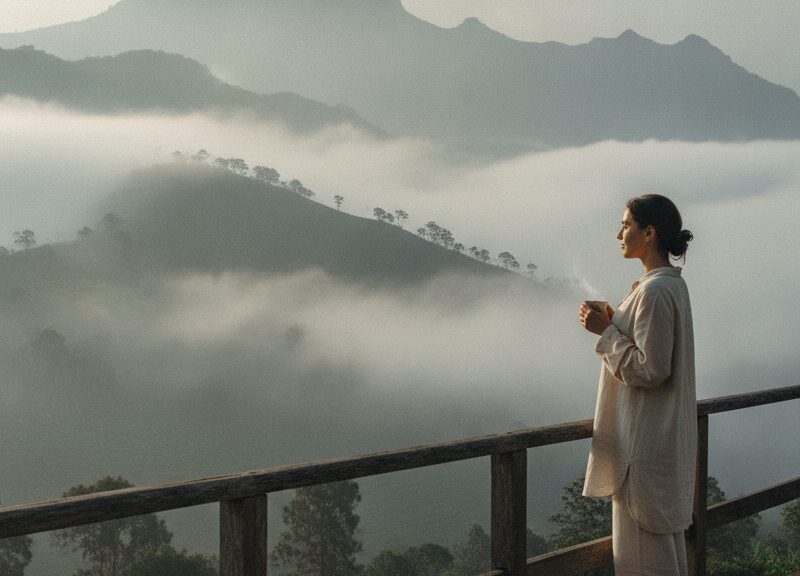
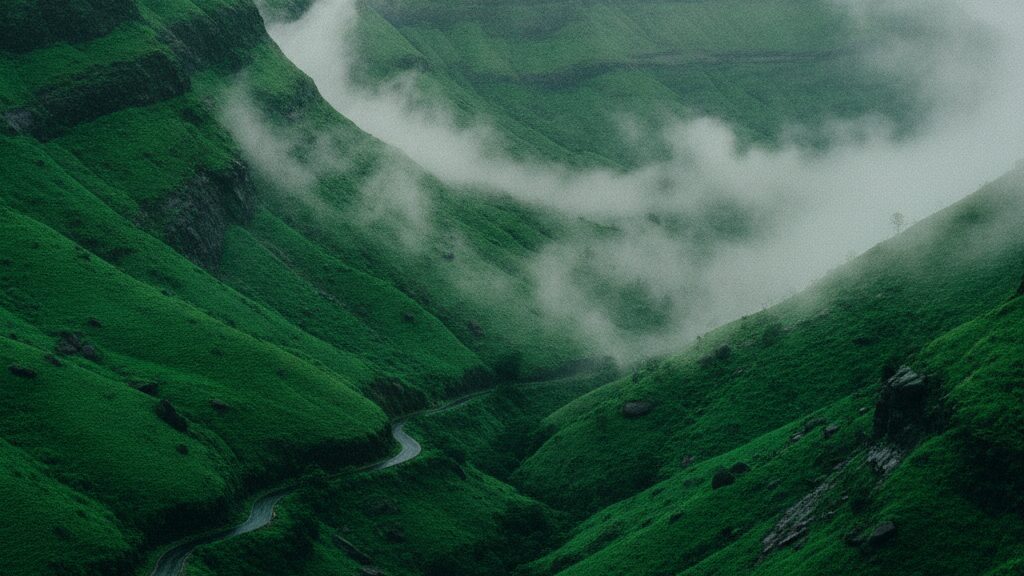
Igatpuri after a heavy downpour isn’t just green, it’s a saturated, almost artificial emerald. When the clouds drop over the Sahyadris, visibility can shift from miles to meters in a matter of seconds. Most people searching for “Igatpuri after rain photos” are really asking whether the greenery is as intense as it looks online. It is.
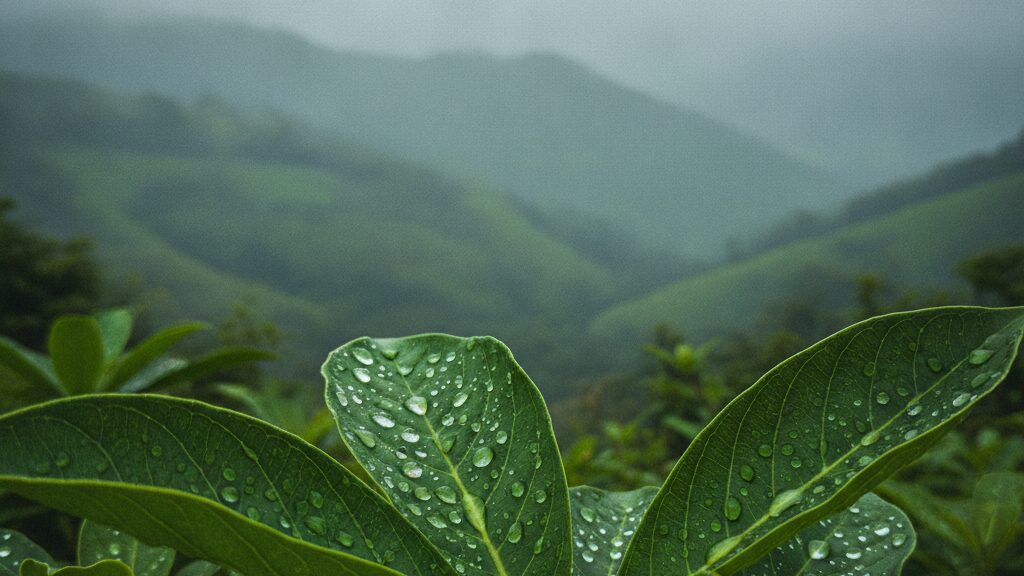
The mist doesn’t just sit in the sky here, it clings to the valley floors and wraps around anything in its path, giving photos a soft-focus quality without any editing. That’s the main reason families and couples make the two-hour drive from Mumbai and Pune specifically during monsoon.
When to go for the best version of this
There are really two windows, and they photograph differently.
July through September is peak intensity. This is when the green is at its deepest and the waterfalls run hardest, but it’s also when the crowds and the rain itself are heaviest. Roads can flood, treks get cancelled without warning, and popular spots like Kasara Ghat fill up fast once the sun is properly out.
Early October is the trade-off worth knowing about. The soil in the Western Ghats holds moisture well past the monsoon’s end, so the hills stay green and the waterfalls, especially around Kasara Ghat, keep flowing because they’re fed by saturated aquifers rather than that day’s rainfall. What changes is the crowd.
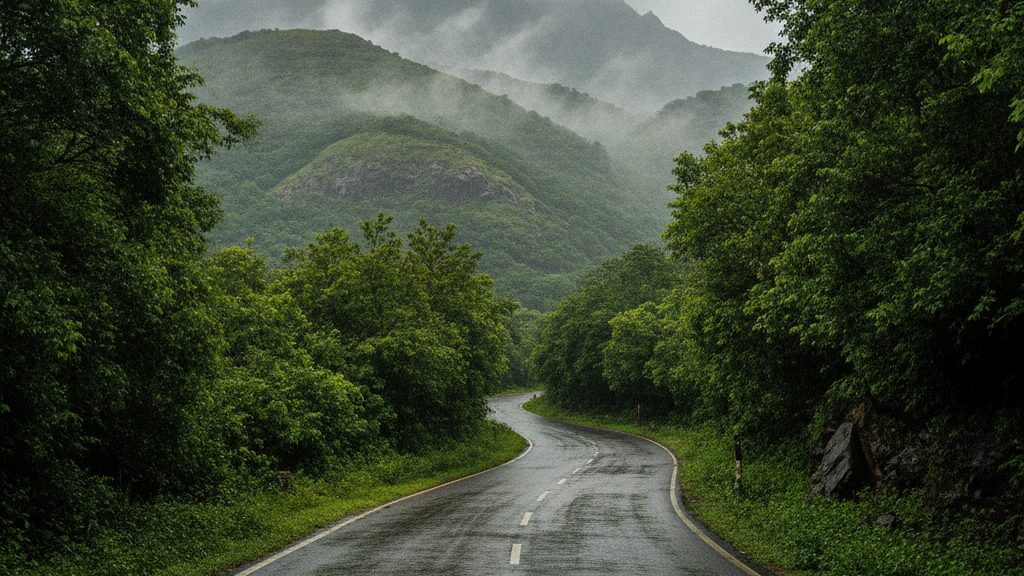
Weekenders thin out fast once August ends, and the rain itself turns sporadic rather than constant, which is actually better for photography: enough mist to keep the mood, not enough to wash out every shot. By mid to late October the green starts fading toward winter brown, so the window is real but it’s short, roughly the first two to three weeks of the month.
If your priority is drama and volume, go in August. If your priority is getting a clean shot without fifteen other people in frame, aim for the first two weeks of October.
Where the shots actually happen
Most visitors stick to the main road and take the same centered, flat photo everyone else does. A few spots consistently outperform the rest, and each rewards a slightly different approach.
Kasara Ghat is the obvious one, and for good reason. The road cuts through cliffs where waterfalls spill directly onto the tarmac, which makes it the most photographed stretch in the region.
Timing matters more than anything else here: arrive at 10 AM and you’re fighting crowds and cars; arrive at 6 AM and you get the mist and the road to yourself. For the water itself, skip the static shot.
A long-exposure setting, or an iPhone Live Photo converted to long exposure, turns the flow into something closer to silk, and the contrast against the dark basalt rock is what actually makes a waterfall photo stand out rather than look generic.
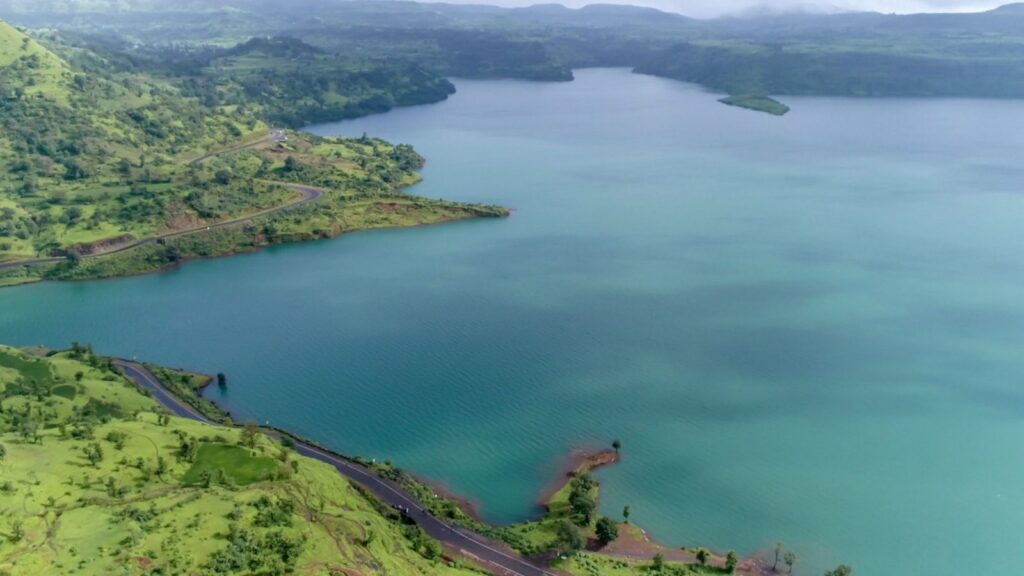
Bhavali Dam works differently. This is a wide, symmetrical shot, camera low to the water’s edge, aiming for a mirror effect between the sky and the reservoir. Overcast light works in your favor here since it kills the glare that direct sun throws across water. Frame the dam through the overhanging trees rather than shooting it flat and open. Late afternoon, roughly 5:30 to 6:30 PM, gives the softest light for this one.
Dhamma Giri is the outlier on this list, white, minimalist, architectural rather than natural. Stand dead center on the walkway for a symmetrical shot of the pagoda against the sky, and go early, by 6 AM if you can, since it’s the only reliable window before other visitors start arriving. This is a shot that depends on empty space, not scenery, so resist the urge to fill the frame.
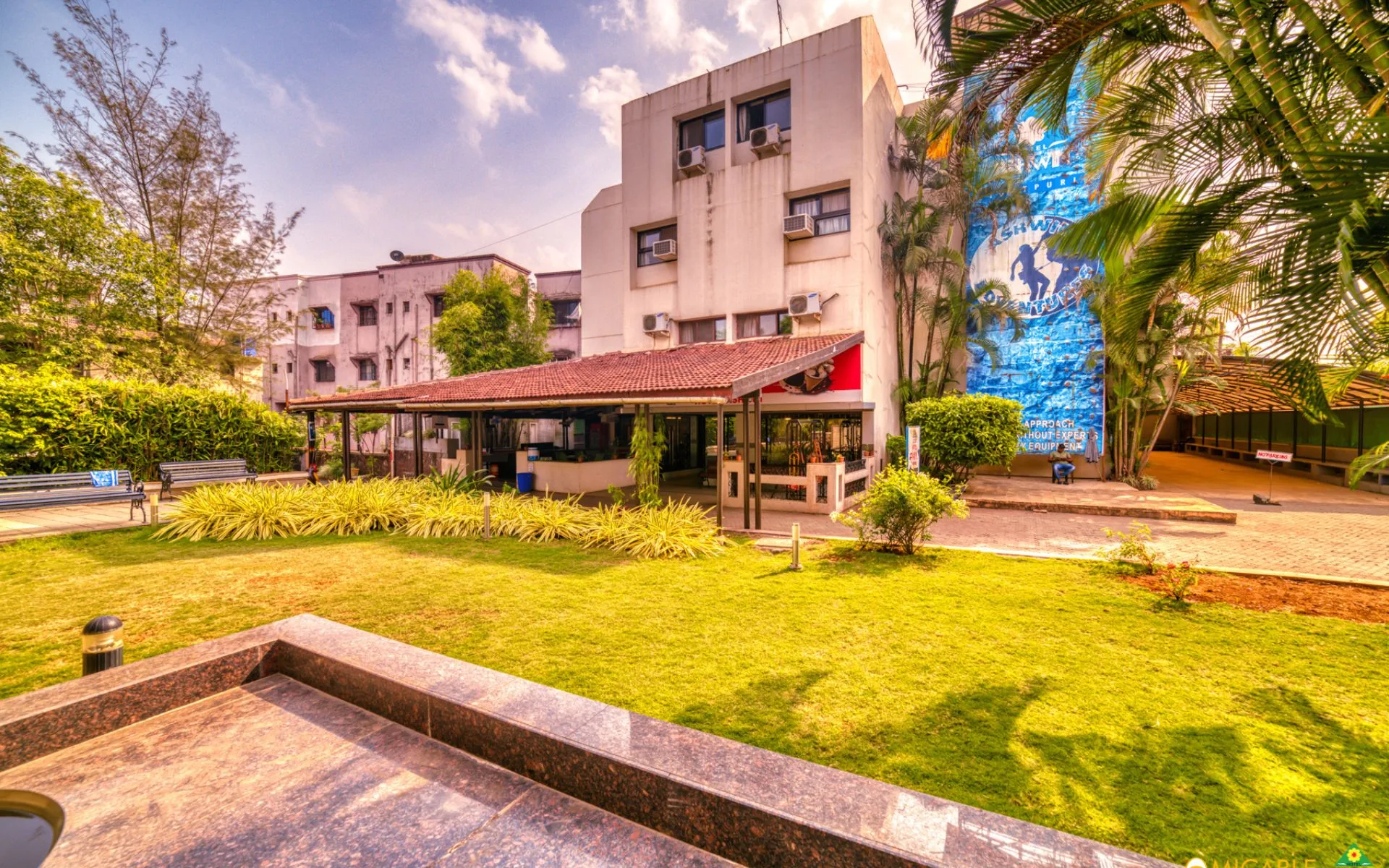
The resort itself is worth more than people give it credit for. A pool with the misty peaks filling the top third of the frame reads as a proper retreat shot without any extra effort, and it’s a fallback that works regardless of what the weather is doing everywhere else.
Tringalwadi Fort adds height to the composition that the roadside spots can’t. The climb is short, under two hours round trip, and the payoff is a wide shot of Vaitarna Dam and the surrounding Sahyadri range laid out below, fully green and often threaded with low cloud. Go in the late morning once the first fog has burned off but before the afternoon haze sets in, and shoot from the ruined bastion near the top rather than the open plateau, since the old stonework in the foreground gives the landscape shot something to anchor on. Carry a rain cover for the gear; this one gets wet on the way up more often than the valley floor does.
For waterfalls beyond the Kasara Ghat stretch, Vihigaon and Ashoka are the two worth the detour, both a short drive off the highway rather than roadside. Neither draws the crowds Kasara does, which means you can actually set up a tripod without someone walking into frame. Shoot Vihigaon from the base looking up for scale, and save the long exposure technique for Ashoka, where the drop is steeper and the flow thin enough that the silk-water effect reads better than it does at the wider falls closer to town.
Getting the technical side right
Mist is genuinely hard to shoot well because most cameras see a white wall and try to compensate by darkening the whole image. The fix is the opposite of instinct: slightly overexpose the shot. That keeps the mist looking white and airy instead of grey and flat. For smartphones, tap to focus, then manually drag exposure up rather than trusting auto mode.
Blue hour, the stretch just before sunrise and just after sunset, gives the softest light and the thinnest crowds. In practice that’s roughly 5:45 to 6:30 AM for sunrise shots, since that’s also when Kasara Ghat and Dhamma Giri are least crowded.
Humidity is the part people forget to plan for. It sits near 90% during peak rain, and a lens moving straight from an air-conditioned room into that air will fog up within seconds. Leave your gear in its bag for about ten minutes after stepping outside so it can reach ambient temperature before you start shooting. A basic rain sleeve, or even a plastic bag with a hole cut for the lens, is enough to keep a camera dry through most of a shoot.
A few smaller habits make a real difference: turn on grid lines so horizons stay level, shoot video at 60fps so you can slow waterfalls and wind-blown trees down to a dreamy 24fps in post, and go easy on the saturation slider. The green here is already intense enough on its own; push it further and a photo starts looking synthetic instead of just vivid.
When the rain cancels your plans entirely
Sometimes the rain isn’t moody, it’s just too much to shoot in. If your trek gets called off, the instinct is to feel like the trip is ruined. It isn’t, but it does mean shifting your objective from chasing a specific shot to working with what’s actually available.
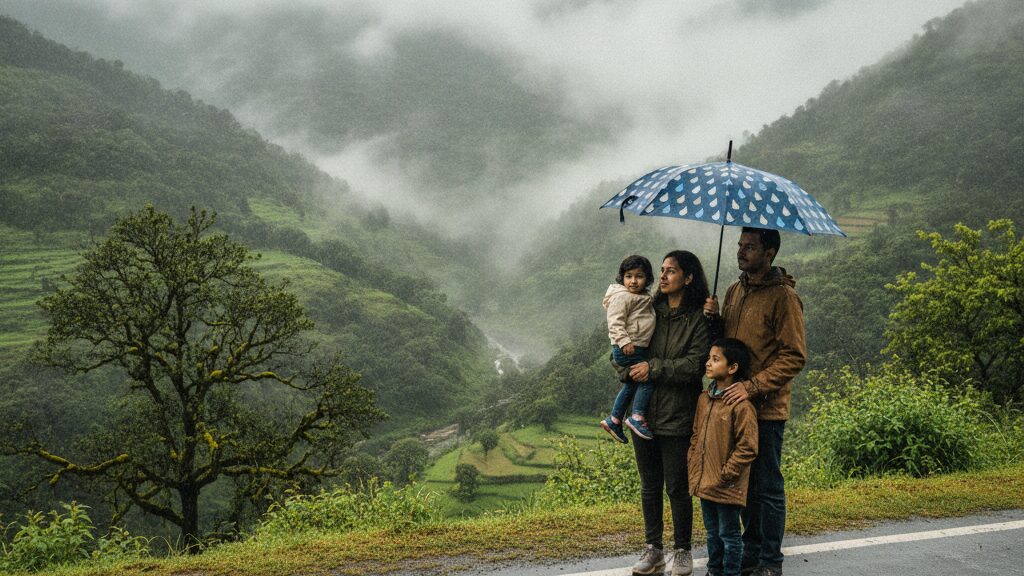
The first move is dropping foot access for vehicle-based sightseeing. A slow drive through Kasara Ghat gets you the same deep green and cascading water without the risk of a slip on a muddy trail, and it keeps the plan intact even when the trail itself is off-limits. If the rain lightens between roughly 11 AM and 3 PM, that’s usually the best window for a short, paved walk or a viewpoint stop.
Ask the resort staff before you assume a trail is unsafe. Weather apps don’t know the specific condition of a Sahyadri slope on a given morning; the people who walk these paths daily do, and they’ll tell you plainly which routes are washed out versus just slippery.
If outdoor shooting is off the table for the day entirely, the interior becomes the subject. A steaming plate of food against rain-streaked windows, kids in raincoats transitioning into a warm AC room, the pool used in the rain rather than despite it, these are legitimate shots, not consolation prizes. Shoot food at a 45-degree angle rather than straight down to catch both texture and steam, with the misty grounds blurred in the background. It’s a different kind of photo, but it tells a real story about the trip.
Frequently Asked Questions
When is the best time to see Igatpuri’s most intense greenery?
July through September, following the heaviest rainfall. Early October holds onto most of the same color with noticeably fewer people around.
Is it too late for waterfalls and photos in October?
No. The mountains stay saturated well into the month, so Kasara Ghat and similar spots are usually still running through the first two to three weeks.
What’s the best camera setting for mist?
Slightly overexpose the shot rather than letting the camera default to dark. A wide-angle lens also helps capture the scale of the hills without the mist reading as a flat white wall.
My trek got cancelled. What should I shoot instead?
Switch to vehicle-based routes like the Kasara Ghat drive, or turn the resort itself, the pool, the food, the mist over the grounds, into the subject for the day.
Are the waterfalls safe to photograph up close?
Stick to marked paths and avoid standing on wet rocks. A tripod or gimbal helps keep shots steady without needing to get closer than is safe.
Do I need a professional camera for any of this?
No. A modern phone with a wide-angle lens and manual exposure control covers everything in this guide, including the long-exposure waterfall shots.
How do I keep my gear from fogging up in the humidity?
Let it sit in your bag for about ten minutes after leaving an air-conditioned room so it reaches ambient temperature before you start shooting.
Is Igatpuri far from Mumbai for a weekend photography trip?
It’s roughly a two-hour drive, which is short enough for a two-day trip built entirely around chasing the right light.
Plan the trip around the light
Whether you’re chasing peak monsoon green or the quieter October window, timing decides more of your photos than the gear does. Check availability at Hotel Ashwin and plan your stay around the mist rather than around it.
Hotel Ashwin is a premier family-friendly, pure-vegetarian resort nestled in the serene Sahyadri mountains of Igatpuri. With a trusted 25-year legacy, we offer peaceful stays, warm hospitality, and a 100% pure-vegetarian and Jain-certified kitchen. We are the ideal tranquil destination for family getaways, couples, and nature lovers travelling from Mumbai and Pune.
- 25+ Years of Trusted Hospitality Excellence
- 100% Pure Vegetarian & Jain-Certified Kitchen
- Top-Rated Family Resort in Igatpuri