Explore the rich birdlife of the Sahyadri mountains after the rains. Discover top spots, species, and beginner tips for igatpuri bird watching today.
Late September changes the Sahyadri mountains faster than any other season. The heavy monsoon downpours stop, the dense cloud cover thins into morning mountain mist, and the forests ringing Igatpuri experience an explosion of insect and plant life. For naturalists and patient travelers, this post-monsoon period delivers the most productive window of the year for igatpuri bird watching.

While weekend crowds rush up the hills for crowded viewpoints and quick photos, quiet birders find a different experience entirely. Within thirty minutes of the town center, undisturbed mixed deciduous forest, riparian corridors, and reservoir wetlands host both resident Western Ghats endemics and early winter migrants arriving from northern breeding grounds. Here is the operational field guide to locating, identifying, and tracking the birdlife of the northern Sahyadri without the noise.
The post-monsoon seasonal shift in the northern Sahyadri
Bird activity follows food supply and line of sight. During July and August, torrential monsoon rain forces birds to shelter in deep thickets to keep their plumage dry and conserve body heat. Spotting anything through thick sheets of water and dense cloud cover is frustrating work. By late September and early October, conditions reverse. The rain drops to occasional light showers, the canopy dries, and the fruiting cycle of native ficus trees peaks.
Local bird watchers notice a significant increase in species sightings between mid-September and November. The air stays cool, with morning temperatures settling comfortably around 18°C to 22°C. Insects hatch across the damp forest floor in massive numbers, bringing insectivores out of the deep understory directly into edge habitats where visibility is clear.
This narrow window also coincides with the arrival of passage migrants. Birds traveling south along the Western Ghats corridor stop here to feed around water bodies and forest fringes before moving further down toward Karnataka and Kerala. If you position yourself along the right forest trails between 6:00 AM and 9:30 AM, you will encounter active feeding flocks that stay busy well into mid-morning.
Priority bird species to look for around Igatpuri
The elevation of the Igatpuri plateau, sitting roughly 600 meters above sea level with nearby peaks crossing 1,000 meters, creates distinct microhabitats. You transition quickly from open grassland scrub into dense moist deciduous valley forests and perennial freshwater wetlands. That habitat variety translates to diverse species groups.
The Malabar Whistling Thrush remains the signature sound of the moist Sahyadri ravines. Known locally as the whistling schoolboy due to its human-like, melodic calls, this dark blue bird thrives near tumbling streams and damp rocky gorges. You hear them before sunrise, long before they show themselves along the stream banks.
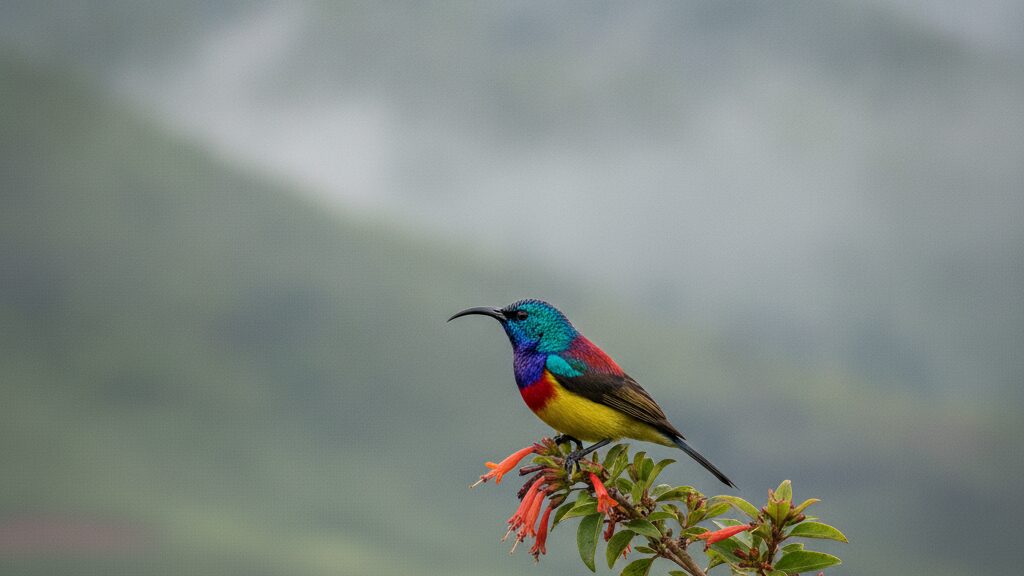
In the mid-canopy and fruiting trees, watch for the Vigors’s Sunbird, a striking Western Ghats endemic with a brilliant crimson back and yellow rump. Unlike widespread purple sunbirds, Vigors’s sunbird relies heavily on nectar from native forest flowers and the blossoms of *Woodfordia fruticosa* (dhawai) that line the hill slopes right after the rains cease.
Forest undergrowth holds the Indian Pitta, an elusive floor feeder that frequently uses the northern Sahyadri as a stopover during migration. Their distinctive two-note whistle sounds through damp bamboo clumps and thick ravine floors. Nearby, in the mid-story, mixed hunting parties form around the Asian Paradise Flycatcher. Adult males with long white streamers flash through shady tree canopies, hawking insects alongside black-naped monarchs and puff-throated babblers.
Raptors patrol the high ridgelines where rising thermal currents develop by late morning. Look toward the basalt cliffs for the Crested Serpent Eagle scanning the forest floor for reptiles, the fast-moving Shaheen Falcon hunting open valley spaces, and the massive Black Eagle gliding low over the tree canopy to rob nests. You can compare this serene exploration of valley wildlife with the active routes covered in our guide to low-impact trekking trails in Igatpuri for beginners.
Four productive bird watching spots near Igatpuri
Success in bird observation comes down to location selection. You do not need to push into uncharted wilderness; you simply need undisturbed forest edges with clean sightlines and steady water sources.
1. Bhavali dam catchment and valley forest
The reservoir behind Bhavali Dam sits roughly eight kilometers from Igatpuri town. The approach road winds through small farm holdings into a narrow forested valley fed by mountain streams. The shallow backwaters draw waders including the Green Sandpiper, Common Sandpiper, and Little Ringed Plover.
Walk the unpaved dirt path running parallel to the southern edge of the reservoir where native trees meet scrub grassland. Early mornings here regularly produce sightings of the Pied Kingfisher hovering over calm bays, the White-throated Kingfisher perched on dead branches, and flocks of Small Minivets feeding in the acacia scrub. Because water levels stay high right after the rains, birds flock to shallow inlets to feed on aquatic larvae and insects.
2. Tringalwadi lake and fort base scrub
Located roughly nine kilometers northwest of town, the area surrounding Tringalwadi Lake offers an open ecotone where water, grassland, and deciduous tree cover overlap. The trail from the village toward the base of the fort cuts through low hills blanketed in post-monsoon wildflowers.
This open scrub habitat favors Indian Silverbills, Yellow-throated Sparrows, Ashy Prinias, and the Rufous-tailed Lark. During September and October, the tall grass hides Quails and Buttonquails that flush only when approached closely. The water margin provides reliable hunting grounds for the Grey Heron, Indian Pond Heron, and Asian Openbill. Light conditions here stay crisp and bright, making this an ideal spot for clean photography without dense canopy shadows.
3. The Kalsubai sanctuary forest fringes
While the summit trail of Kalsubai draws loud hiking groups, the low-elevation forest patches bordering the sanctuary boundary near Bari and Bhandardara present pristine birding territory. These moist deciduous woodlands contain old-growth trees that support canopy specialists.
Here you can observe the Malabar Grey Hornbill moving between fig trees, the Greater Racket-tailed Drongo mimicking other bird calls with uncanny precision, and the Emerald Dove foraging quietly along shaded dirt tracks. Walking quietly along the fringe village paths before 8:00 AM gives you beautiful canopy views without the physical strain of ascending the peak.
4. Upper Vaitarna backwater wetlands
A short drive down the western slopes leads toward the vast Upper Vaitarna reservoir. The shoreline changes continually as water levels fluctuate, leaving muddy shallows and reed beds that attract waterfowl and waders. Large groups of Cotton Pygmy-goose, Spot-billed Ducks, and Little Grebes feed in protected bays.
Ospreys frequently hunt over the open water here, perching on exposed tree branches to rest after a successful dive. For travelers documenting their trip visually, the landscape contrasts sharply with the steep waterfalls found along the main highway, as shown in our field resource on Igatpuri photography spots after the rain.
Essential field protocol for northern Sahyadri birding
Forest birding requires specific habits that differ completely from standard nature walks. The failure mode for most beginners is moving too fast while looking for sudden movement in the trees. Birds see you long before you see them. If you walk steadily, they freeze or slip away silently into deeper foliage.
Instead, employ the sit-and-wait method. Find an active fruiting tree or a clear view across a stream bed, sit down against a rock or tree trunk, and stay completely motionless for fifteen minutes. The forest resets itself. Calls resume, birds drop back down from the canopy to feed, and shy species step out into open patches.
Clothing choice matters directly. Bright white shirts, fluorescent windbreakers, and noisy synthetic pants stand out sharply against post-monsoon greenery. Wear dull olive greens, khaki, or muted browns. Fabrics should be quiet when brushed against branches. Turn mobile phone ringers completely off; even standard vibration modes carry unusual mechanical buzzes that alert wary raptors and thrushes.
Keep your field kit basic and functional:
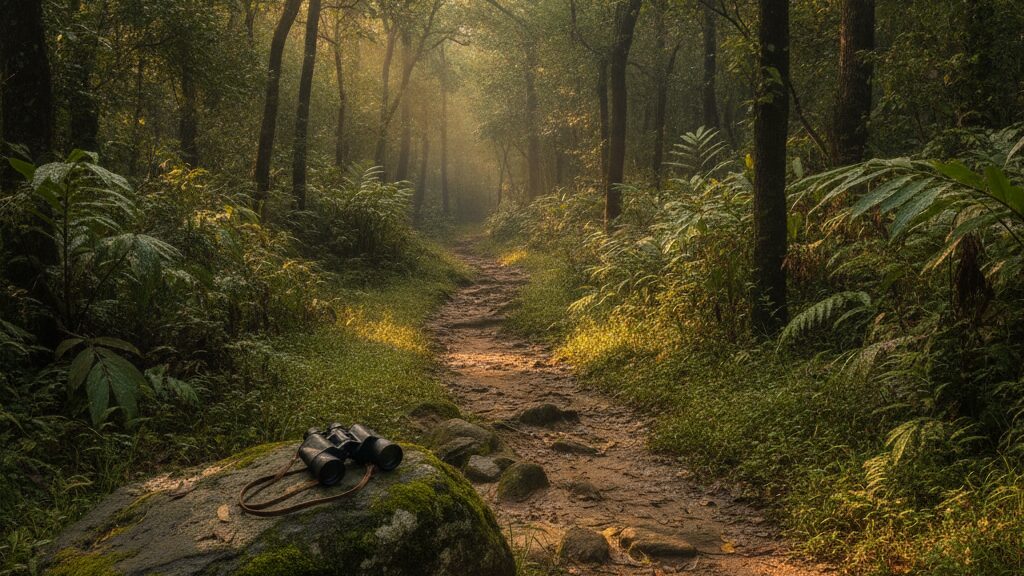
- Binoculars with an 8×42 or 10×42 optical configuration to ensure sharp light transmission in deep forest shade
- A printed regional bird guide or an offline digital field app like Merlin Bird ID configured with the Western India bird pack
- A dull-colored wide-brim hat to shield your eyes from glare while scanning bright canopy perches
- Sturdy water-resistant trail shoes with rubber soles that grip damp basalt rock without slipping
- A lightweight notebook and pencil to sketch field marks, beak shapes, and wing bars on the spot
Bird identification fundamentals for beginners
When you spot an unfamiliar bird in the Sahyadri understory, avoid the rookie mistake of thumbing through a field book while the bird is still in front of you. The bird will fly before you find the right page. Keep your eyes locked on the subject through your optics and mentally check four physical features in order.
First, note the absolute size and silhouette relative to common birds you know. Is it smaller than a sparrow, intermediate like a red-vented bulbul, or broad-bodied like a crow? Next, examine the bill structure. A short, thick conical bill points to a seed-eating finch or sparrow. A thin, down-curved bill indicates a nectar feeder like a sunbird. A sharp, hooked tip signals a shrike or small bird of prey.
Third, record plumage landmarks: wing bars, eye rings, crown stripes, and throat patches. Finally, observe the movement pattern. Does the bird hop on the ground, climb vertical tree trunks like a nuthatch, or dart from an exposed perch to catch an insect and return to the exact same branch like a flycatcher? Once the bird departs, write down those four distinct markers immediately. Identifying the species from your notes afterward becomes straightforward.
Planning a comfortable birding retreat base
Serious field birding demands early departures. Setting out at 5:45 AM requires a restful night and a dependable place to recharge when midday heat slows bird activity between 11:30 AM and 3:30 PM. Returning to comfortable surroundings makes long field sessions sustainable across a full weekend.
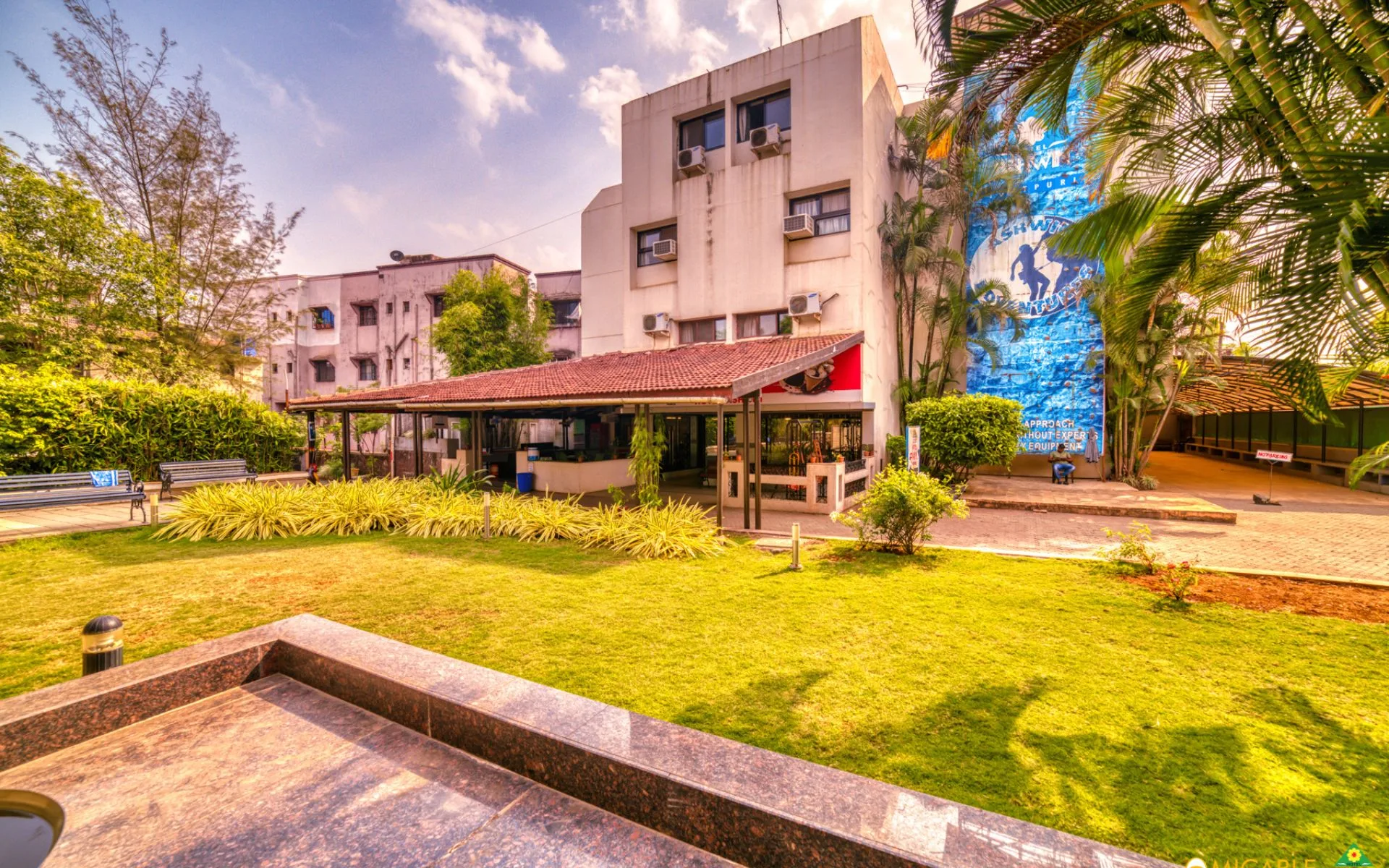
At Hotel Ashwin, we have hosted naturalists, families, and quiet travelers for over 25 years. Located just 2 hours from Mumbai, our serene property gives you direct access to the regional backroads leading toward Bhavali and Tringalwadi while providing an environment built around comfort and quiet. You can review accommodation options directly through our deluxe AC rooms and suites.
Early mornings outdoors build a healthy appetite, but naturalists who follow strict dietary principles often struggle with regional dining options on the road. We operate a Jain-certified kitchen and serve 100% pure vegetarian food with full capability for strict Jain meal preparations, avoiding root vegetables entirely without compromising flavor or quality. You can return from exploring the mountain mist to hot, freshly prepared breakfasts made with strict hygiene standards. Explore our culinary commitments through our pure vegetarian and Jain dining menu.
If you are planning a monsoon getaway or traveling as a mixed group where only some members want to wake at dawn for binoculars and field notebooks, choosing a family-friendly resort prevents friction. While you spend quiet hours along reservoir trails, family members can enjoy landscaped gardens, indoor games, and a calm hill station atmosphere. Our versatile property is even an ideal venue for a peaceful destination wedding in the hills. Learn more about balanced travel options in our complete guide to Igatpuri weekend getaways or browse arrangements for multi-generational trips with our overview of family stays in Igatpuri.
Field ethics and habitat preservation
The post-monsoon ecosystem along the Western Ghats crest is fragile. Many bird species establish nesting territories or prepare for energy-demanding migratory flights during this time. Poor field behavior stresses wildlife and degrades habitats that have sustained these populations for centuries.
Never use audio playback calls to lure birds into the open. While playing recorded territorial calls on a smartphone often brings curious birds closer, it wastes their critical energy reserves, distracts them from feeding chicks, and exposes them to predators. Rely on fieldcraft and patience instead.
Stay strictly on established cattle paths and village dirt trails. Trampling through damp grasslands crushes microhabitats, disturbs ground-nesting birds, and damages fragile post-monsoon flora. Carry all litter, including plastic water bottles and food wrappers, back to your hotel for proper disposal. Respecting the quiet rhythms of the Sahyadri ensures these mountain forests remain rich with wildlife for every season to come.
Frequently Asked Questions
What is the best time of year for bird watching in Igatpuri?
The post-monsoon months from late September through February provide the highest bird diversity. The clear weather after heavy monsoon rains coincides with active resident feeding and the arrival of winter migratory species.
Which rare birds can be spotted around the Sahyadri range near Igatpuri?
Key regional specialties include the Malabar Whistling Thrush, Vigors’s Sunbird, and the Indian Pitta. Patient observers also encounter raptors such as the Black Eagle and Shaheen Falcon along mountain cliffs.
Do I need expensive camera equipment to enjoy bird watching here?
A good pair of 8×42 binoculars and a reliable regional field guide are all you need to start. High-end telephoto lenses are optional tools for photographers rather than a requirement for field identification.
Are the birding trails around Bhavali Dam suitable for beginners?
The dirt tracks running alongside Bhavali Dam feature level terrain and clear viewing angles over open water and scrub forest. Beginners can easily spot kingfishers, prinias, and water birds without demanding physical hiking.
What should I wear during early morning bird watching in Igatpuri?
Wear muted earth tones like dull green, khaki, or brown to blend into the surrounding vegetation. Sturdy walking shoes and a light windbreaker are recommended to handle the cool morning mountain mist.
How far is Igatpuri from Mumbai for a birding weekend?
Igatpuri is located northeast of Mumbai via the NH160 highway, making the drive approximately 2–3 hours. This convenient distance makes it an easy destination for early morning birding trips.
Can families with children participate in bird watching trips around Igatpuri?
Gentle lakeside walks around Tringalwadi and Bhavali provide accessible terrain for older children interested in wildlife. Pairing short morning field outings with a comfortable, family-friendly resort stay keeps the experience engaging for everyone.
Are there reliable pure vegetarian and Jain dining options for eco-tourists staying in Igatpuri?
Hotel Ashwin provides a trusted Jain-certified kitchen with 100% pure vegetarian and strict Jain food options. Guests can enjoy authentic, hygienic meals after returning from early morning field excursions.
Reserve your peaceful weekend retreat at Hotel Ashwin Igatpuri to experience the post-monsoon birdlife of the Sahyadri mountains. Book your serene getaway today.
Hotel Ashwin is a premier family-friendly, pure-vegetarian resort nestled in the serene Sahyadri mountains of Igatpuri. With a trusted 25-year legacy, we offer peaceful stays, warm hospitality, and a 100% pure-vegetarian and Jain-certified kitchen. We are the ideal tranquil destination for family getaways, couples, and nature lovers travelling from Mumbai and Pune.
- 25+ Years of Trusted Hospitality Excellence
- 100% Pure Vegetarian & Jain-Certified Kitchen
- Top-Rated Family Resort in Igatpuri
This article was drafted with AI assistance and carefully reviewed by the Hotel Ashwin team to ensure accurate, up-to-date information for your stay in Igatpuri.